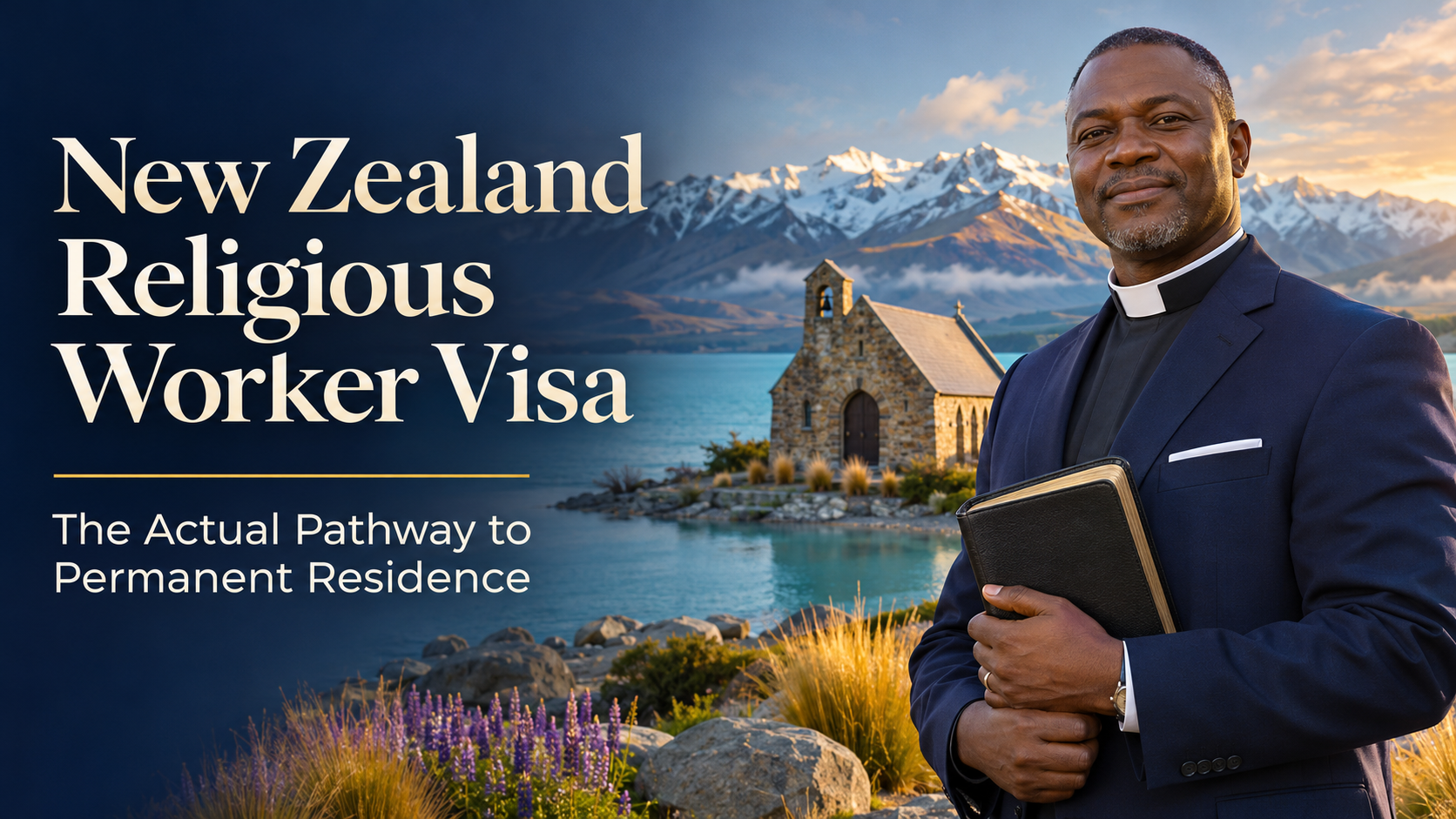
Are you a pastor or religious worker considering serving in New Zealand? There is a dedicated visa route that can eventually lead to permanent residence. However, it involves separate applications, continued sponsorship and specific eligibility requirements.
Understanding each stage will help you plan beyond the initial work visa.
1. Secure a qualifying religious work offer
The starting point is an offer from an eligible New Zealand religious organisation registered as a charity. Its main purpose must be advancing religion, and it must genuinely need your services.
Qualifying duties include teaching religious scripture, leading worship or ceremonies, and providing spiritual guidance. Religious study alone does not qualify.
Your sponsor must be able to meet its support obligations, including accommodation, financial support and help returning home if necessary. Being a pastor, holding an ordination certificate or having church connections does not replace these requirements.
2. Apply for the Religious Worker Work Visa
You need at least two years of relevant religious training and/or work experience, alongside the qualifying offer and sponsorship. Health, character and genuine-intention requirements also apply.
The initial visa permits up to two years in New Zealand. Work is restricted to the approved religious role, sponsoring organisation and location. Evidence may include ordination documents, qualifications, references and work records.
Source: Immigration New Zealand — Religious Worker Work Visa.
3. Maintain lawful status until you qualify for residence
The initial two-year visa does not cover the full qualifying period for residence. You may apply for another Religious Worker Work Visa, allowing up to four years in total. A subsequent visa requires continuing religious work with the same sponsoring organisation and compliance with the relevant conditions.
Residence eligibility begins after at least three years on this work visa, subject to the remaining requirements. An extension and a resident visa each require approval.
4. Apply for the Religious Worker Resident Visa
To qualify, you must be in New Zealand, be aged 55 or younger, and have held the qualifying work visa for at least three years while meeting its conditions. You also need ongoing religious work and an eligible sponsor.
You must demonstrate at least five years of relevant religious training and/or experience. Supporting evidence can include qualifications, ordination records, testimonials and employment records. This is a total experience requirement, rather than five additional years after your initial work visa.
English-language, health and character requirements apply. Applicants and included family members must also meet the restriction concerning welfare assistance received since the work visa was granted.
Sources: Resident Visa requirements and official evidence requirements.
5. Complete five years under the resident visa conditions
A Religious Worker Resident Visa allows an indefinite stay, but initially carries work and sponsorship conditions. For five years from your first day as a resident, you must undertake the specified religious work with your sponsor. Changing sponsors requires an approved variation of conditions.
After five years as a religious worker resident, you can apply for a Permanent Resident Visa. Where section 49 conditions apply, you must meet them and request their removal first. Permanent residence also requires meeting the applicable character and commitment-to-New-Zealand requirements.
Sources: Religious Worker Resident Visa, religious worker residence conditions and Permanent Resident Visa.
What about your family?
Partners and children apply separately at the work visa stage. At residence stage, eligible partners and dependent children aged 24 or younger may be included, subject to relationship, dependency, financial or sponsorship, and other requirements.
Plan for the full journey
The pathway combines at least three qualifying work-visa years with five years as a religious worker resident: roughly eight years, plus application processing and any delays. This is a planning estimate, not a guaranteed approval date.
Start by confirming your sponsor, documenting your experience and checking your eligibility for the later residence stage—especially the age limit. Review the official requirements before each application, as immigration rules can change.