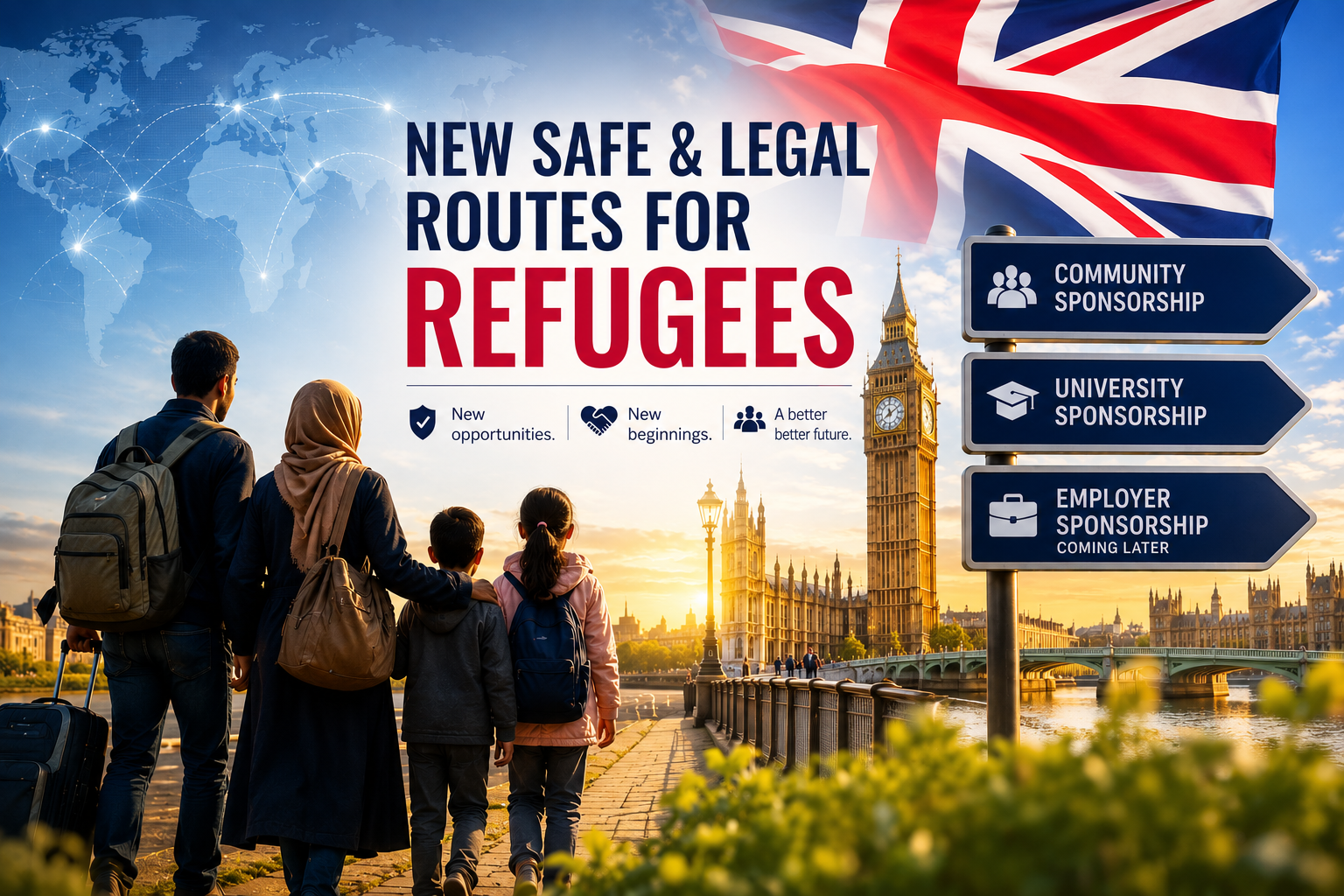
The UK government has confirmed plans to introduce new safe and legal routes for refugees, with the first phase expected to begin rolling out in autumn 2026.
The announcement, made by the UK Home Office, is part of a broader immigration strategy aimed at providing genuine refugees with safer alternatives to dangerous and illegal journeys while strengthening the UK’s border security.
However, the announcement has generated significant confusion online. Many people mistakenly believe that the UK has launched a new immigration program open to anyone wishing to relocate. That is not the case.
Here’s everything you need to know.
What Are the New Safe and Legal Routes?
The new initiative creates additional pathways for eligible refugees to rebuild their lives in the United Kingdom through structured sponsorship programs.
Instead of risking dangerous journeys or relying on human trafficking networks, qualifying refugees may be able to enter the UK through approved legal channels.
The government has indicated that these routes will be introduced gradually and will complement existing humanitarian resettlement programs.
Why Is the UK Introducing These Routes?
According to the Home Office, the objectives include:
- Providing safer alternatives to irregular migration.
- Reducing dangerous Channel crossings.
- Combating people-smuggling and human trafficking networks.
- Supporting vulnerable refugees through organized resettlement.
- Strengthening border control while maintaining humanitarian commitments.
The government believes that expanding carefully managed legal pathways can help protect vulnerable individuals while discouraging illegal entry into the country.
The Three Main Routes Expected
1. Community Sponsorship
Under this route, approved community organizations, charities, faith groups, and local volunteers can sponsor eligible refugees.
Sponsors typically help refugees by providing:
- Accommodation
- Integration support
- English language assistance
- Access to healthcare
- Help finding employment
- Community orientation
This model has already existed on a smaller scale and is expected to be expanded.
2. University Sponsorship
Selected universities will be able to sponsor refugee students.
This pathway is designed to help talented individuals whose education has been disrupted because of war, persecution, or displacement.
Support may include:
- Admission into academic programs
- Tuition assistance (where applicable)
- Student support services
- Integration into university life
This route focuses specifically on refugees rather than general international students.
3. Employer Sponsorship (Coming Later)
One of the most anticipated announcements is the planned introduction of an employer sponsorship pathway.
Under this model:
- Approved UK employers may sponsor eligible refugees for employment.
- Refugees with relevant skills can transition into the workforce.
- Businesses facing labour shortages may benefit from access to qualified workers.
The government has stated that further details about eligibility, participating employers, and implementation timelines will be announced later.
Who Qualifies?
This is the most important question.
These routes are not available to everyone.
Applicants generally must:
- Meet the legal definition of a refugee or otherwise qualify for international protection.
- Pass security and identity checks.
- Complete biometric screening.
- Be referred or sponsored through an approved pathway.
- Meet any additional eligibility requirements set by the UK government.
Being interested in moving to the UK does not qualify someone for these programs.
Refugee vs. Regular Immigrant: What’s the Difference?
This is where many social media posts become misleading.
A refugee is someone who has fled their country because they face persecution based on factors such as:
- Race
- Religion
- Nationality
- Political opinion
- Membership of a particular social group
A regular immigrant, on the other hand, chooses to move for reasons such as:
- Employment
- Education
- Family reunification
- Business opportunities
- Better quality of life
The UK’s new routes are intended only for refugees and people in need of protection.
Can Nigerians Apply?
The answer depends on individual circumstances.
A Nigerian citizen cannot apply simply because they want to relocate.
However, if a Nigerian has been recognized as a refugee under international law and meets the eligibility requirements of one of the sponsorship routes, they may be considered.
For the vast majority of Nigerians seeking to study, work, or settle in the UK, the existing immigration routes remain the appropriate options.
These include:
- Skilled Worker Visa
- Student Visa
- Health and Care Worker Visa
- Global Talent Visa
- Family Visa
The new refugee routes do not replace these visa categories.
Will People Be Able to Apply Directly?
At this stage, there is no indication that individuals will submit open online applications similar to work or student visas.
Instead, access is expected to be through:
- Approved sponsors
- Partner organizations
- Humanitarian agencies
- Universities
- Participating employers
Further operational details are expected before the rollout begins.
How Does This Affect Existing UK Immigration Rules?
The announcement does not change the UK’s existing immigration system for workers, students, tourists, or families.
Current visa requirements remain in place.
Applicants who wish to:
- Study in the UK
- Work in the UK
- Visit the UK
- Join family members
must continue using the appropriate visa routes.
Beware of Misleading Social Media Posts
Following the announcement, numerous posts have suggested that “the UK is opening immigration for everyone.”
This is inaccurate.
If you see advertisements claiming:
- “Apply now for the UK’s new refugee visa”
- “Everyone can relocate under the new refugee program”
- “No sponsorship required”
you should exercise caution.
Always verify immigration information through official government sources or licensed immigration professionals.
What We Can Expect Next
As the rollout approaches, the UK government is expected to publish additional information covering:
- Eligibility requirements
- Participating organizations
- Employer application procedures
- University participation
- Annual quotas (if applicable)
- Application processes
- Timeline for implementation
These updates will provide greater clarity on how the new routes will operate in practice.
Final Thoughts
The UK’s announcement represents a significant humanitarian policy development, aimed at expanding safe and legal pathways for refugees while maintaining tighter controls on irregular migration.
However, it is essential to understand that these are not new immigration pathways for the general public. They are specifically designed for people who qualify as refugees under international law and who are supported through approved sponsorship arrangements.
If you are planning to work, study, or settle in the UK through conventional immigration routes, you should continue to follow the existing visa requirements.
Need Guidance on UK Immigration?
Whether you’re planning to study, work, or relocate to the UK, understanding the correct immigration pathway is essential.
Zinchi International provides professional support for:
- UK Student Visa Applications
- UK Skilled Worker Visa Guidance
- University Admissions
- Scholarship Opportunities
- Visa Documentation Support
- Immigration Advisory Services
Contact us today for expert guidance tailored to your immigration goals.
Disclaimer: This article is for informational purposes only and should not be considered legal or immigration advice. Immigration policies can change, and eligibility is assessed individually by the relevant UK authorities.