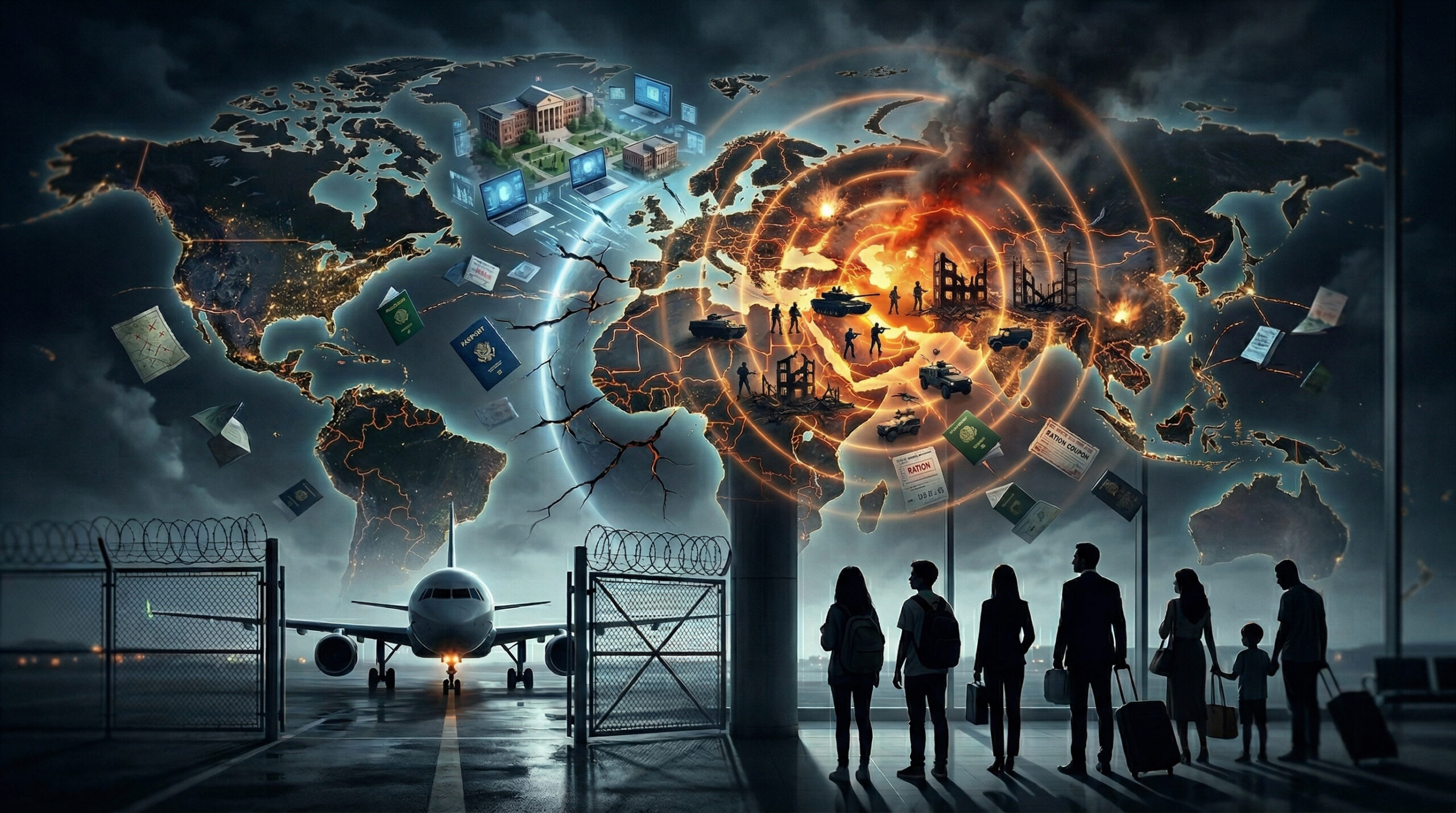
The ongoing Iran war in 2026 is no longer just a regional conflict—it has evolved into a global disruption affecting how people move, study, and migrate across borders. From rising travel restrictions to collapsing student mobility systems, the ripple effects are being felt worldwide.
This article explores how the crisis is transforming global mobility, education, and immigration, and what it means for students, professionals, and governments.
1. Global Mobility: A System Under Stress
Global mobility—the movement of people for work, study, and business—has been severely disrupted.
Travel Disruptions and Airspace Restrictions
The conflict has triggered flight cancellations, rerouted air traffic, and unsafe travel corridors, especially across the Middle East. Governments have issued evacuation orders, and thousands of expatriates are leaving the region.
In some cases, entire shipping and travel routes have been blocked, particularly around the Strait of Hormuz, a critical global transit point.
Reverse Migration Trends
Countries like India have already seen hundreds of thousands of citizens returning home due to safety concerns and job losses.
This trend signals a major shift:
- Skilled workers abandoning overseas jobs
- Reduced remittances for developing economies
- Increased pressure on local job markets
Corporate Mobility Challenges
Multinational companies are:
- Relocating staff from high-risk zones
- Delaying international assignments
- Reassessing global expansion plans
This is leading to a more cautious and fragmented global workforce system.
2. Education: A Generation Disrupted
The education sector—especially international education—has taken a direct hit.
School Closures and Academic Interruptions
Schools and universities in affected regions have shut down or moved online, disrupting learning and delaying graduation timelines.
In extreme cases, educational institutions have been damaged or destroyed, highlighting the vulnerability of education during conflict.
Decline in International Student Mobility
The war is causing a structural shock to global student mobility.
Key impacts include:
- Students avoiding conflict-prone regions
- Increased visa scrutiny and travel uncertainty
- Declining enrollments in major destinations like the US, UK, and Canada
Rise of Remote and Transnational Education
Universities are adapting by:
- Expanding online learning
- Opening offshore campuses
- Partnering with institutions in safer regions
This could permanently reshape how education is delivered globally.
3. Immigration Systems: Tightening and Slowing Down
Immigration systems worldwide are feeling the strain.
Visa Delays and Policy Shifts
Conflict-driven uncertainty has led to:
- Longer visa processing times
- Stricter background and security checks
- Temporary suspensions of visa services in affected regions
Refugee and Humanitarian Pressure
The war has created a major humanitarian emergency, with millions displaced or seeking asylum.
This is forcing countries to:
- Expand refugee programs
- Tighten border controls simultaneously
- Balance humanitarian aid with national security
Changing Immigration Priorities
Countries are beginning to prioritize:
- Highly skilled migrants over general migration
- Domestic workforce protection
- Strategic migration aligned with economic needs
4. Economic Shock: The Root Cause of It All
At the center of these disruptions is a massive global economic shock.
- Oil supply disruptions are driving inflation worldwide
- Global growth forecasts are being downgraded
- Up to 32 million people could fall into poverty if the crisis continues
This economic instability directly affects:
- Students’ ability to fund education
- Governments’ immigration policies
- Employers’ willingness to hire internationally
5. What This Means for Nigerians (and Global Citizens)
For countries like Nigeria, the implications are significant:
For Students
- Expect higher competition and stricter visa rules
- Consider alternative study destinations
- Prepare for possible delays or policy changes
For Professionals
- Overseas job opportunities may decline in unstable regions
- Demand may rise in safer economies
For Immigration Businesses
- Increased demand for advisory services and risk guidance
- Need to stay updated with rapidly changing policies
Conclusion: A New Global Order in Motion
The Iran war is not just a temporary crisis—it is reshaping the global systems of mobility, education, and immigration.
We are moving toward a world where:
- Mobility is more restricted and risk-sensitive
- Education is more digital and decentralized
- Immigration is more selective and strategic
For individuals and organizations, the key to navigating this shift is adaptability, awareness, and proactive planning.