A new U.S. visa policy has generated widespread discussion after reports claimed that Nigerians and citizens of several African countries must now pay up to $20,000 before receiving a U.S. tourist or business visa.
While the reports are based on a real policy change, many social media posts have left out important details.
What Has Changed?
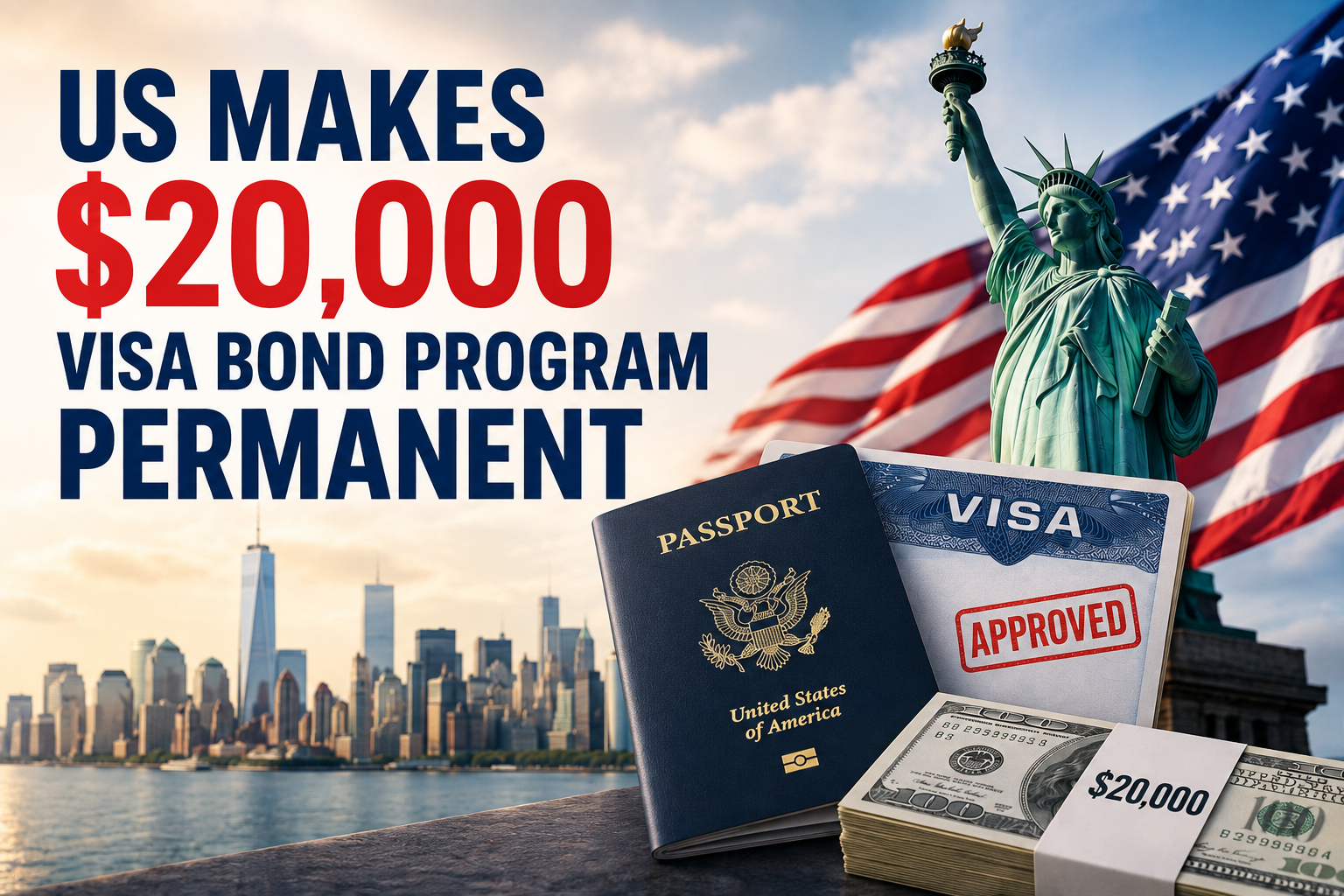
The U.S. Department of State has made its Visa Bond Program permanent, effective August 3, 2026. The policy allows U.S. consular officers to require certain applicants for B-1 (Business) and B-2 (Tourist) visas to post a refundable bond of up to $20,000.
The bond is intended to reduce visa overstays and encourage compliance with U.S. immigration laws.
Who Has to Pay?
This is where many social media posts are misleading.
Not every applicant from the affected countries will be required to pay the bond.
Instead:
- The decision is made case by case by the U.S. consular officer.
- Only certain applicants may be asked to provide the bond.
- Applicants who are not selected for the bond requirement will continue with the normal visa process.
Is Nigeria Affected?
Yes.
Nigeria is among the 50 countries included in the permanent Visa Bond Program. However, this does not mean every Nigerian applying for a U.S. tourist or business visa must pay $20,000.
Is the Money Lost?
No—provided the traveler follows the visa rules.
The bond is refundable if the traveler:
- Leaves the United States before their authorized stay expires.
- Complies with all visa conditions.
The bond may be forfeited if the traveler overstays or violates the terms of the visa.
Why Did the U.S. Introduce This Policy?
The U.S. government says the program is designed to:
- Reduce visa overstays.
- Improve compliance with immigration laws.
- Protect national security.
Supporters argue it encourages visitors to respect visa conditions, while critics say it could make legitimate travel more difficult for people from developing countries.
What This Means for International Travelers
If you plan to apply for a U.S. B-1 (Business) or B-2 (Tourist) visa, there’s no need to assume you’ll automatically be required to pay a visa bond.
Instead, travelers should:
- Be aware that the visa bond requirement applies only to certain applicants and is determined on a case-by-case basis by a U.S. consular officer.
- Ensure all application documents are accurate, complete, and truthful.
- Demonstrate strong ties to their home country and a genuine intention to return after their visit.
- Comply with all U.S. visa conditions if their application is approved, as any required bond is refundable once the traveler leaves the United States within the authorized period and follows all visa rules.
The introduction of the permanent Visa Bond Program does not change the standard application process for most travelers. Instead, it provides U.S. authorities with an additional tool that may be used in selected cases to encourage compliance with U.S. immigration laws.