
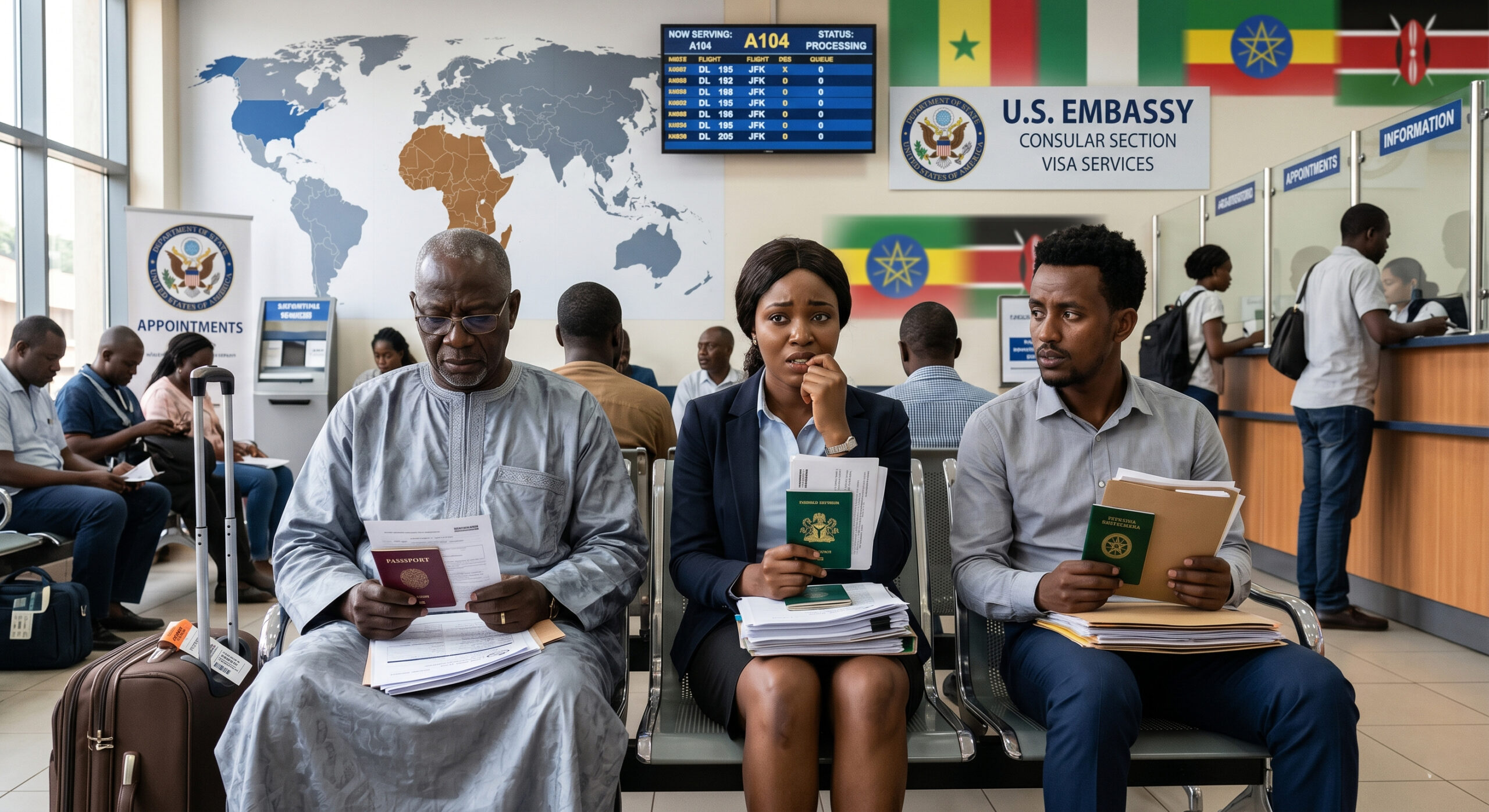
Traveling to the United States remains a dream for many Africans seeking tourism, family visits, business opportunities, or short-term events. However, recent data from the U.S. Department of State reveals that some African countries are facing significantly higher refusal rates for B1/B2 visitor visas in Fiscal Year 2025.
The B1/B2 visa is issued for temporary visits such as tourism, business meetings, medical treatment, and family visits. A refusal does not always mean a permanent denial—it often means the applicant did not sufficiently prove eligibility at the time of the interview.
Top 20 African Countries with the Highest Refusal Rates
| Rank | Country | Refusal Rate |
|---|---|---|
| 1 | Somalia | 83.52% |
| 2 | South Sudan | 76.09% |
| 3 | Gambia | 75.29% |
| 4 | Guinea-Bissau | 75.17% |
| 5 | Senegal | 73.96% |
| 6 | Liberia | 73.01% |
| 7 | Togo | 72.01% |
| 8 | Burkina Faso | 71.25% |
| 9 | Sierra Leone | 70.55% |
| 10 | Equatorial Guinea | 68.63% |
| 11 | Kenya | 68.23% |
| 12 | Mauritania | 67.61% |
| 13 | Guinea | 66.90% |
| 14 | Republic of Congo | 64.75% |
| 15 | Rwanda | 64.71% |
| 16 | Benin | 64.58% |
| 17 | Ghana | 64.31% |
| 18 | DR Congo | 63.37% |
| 19 | Sudan | 63.26% |
| 20 | Chad | 61.63% |
Source: U.S. Department of State
Why Are Refusal Rates High?
Several factors can contribute to visitor visa refusals:
1. Insufficient Proof of Ties to Home Country
Applicants must show strong reasons to return home, such as employment, family responsibilities, business ownership, or property.
2. Weak Financial Evidence
Consular officers may deny applications if applicants cannot clearly demonstrate the ability to fund their trip.
3. Inconsistent Documentation
Mismatched information between forms, interviews, and supporting documents can lead to refusal.
4. Previous Immigration Violations
Past overstays, visa misuse, or deportations can negatively affect approval chances.
5. Country-Level Risk Assessments
Some countries may experience higher scrutiny due to economic instability, conflict, fraud concerns, or migration trends.
Important Note About Refusals
A visa refusal is not necessarily final. Many applicants are approved later after improving their documentation, travel history, finances, or overall profile.
How to Improve Approval Chances
If you are planning to apply for a U.S. visitor visa, consider the following:
- Submit truthful and accurate information
- Show clear travel purpose
- Demonstrate stable income or sponsorship
- Provide evidence of strong ties to your home country
- Prepare confidently for the interview
- Avoid fake documents or misleading statements
High refusal rates highlight the importance of preparation, honesty, and proper documentation. If you intend to visit the United States, focus on building a strong application rather than being discouraged by statistics.
Every successful visa starts with a credible profile and a clear purpose of travel.