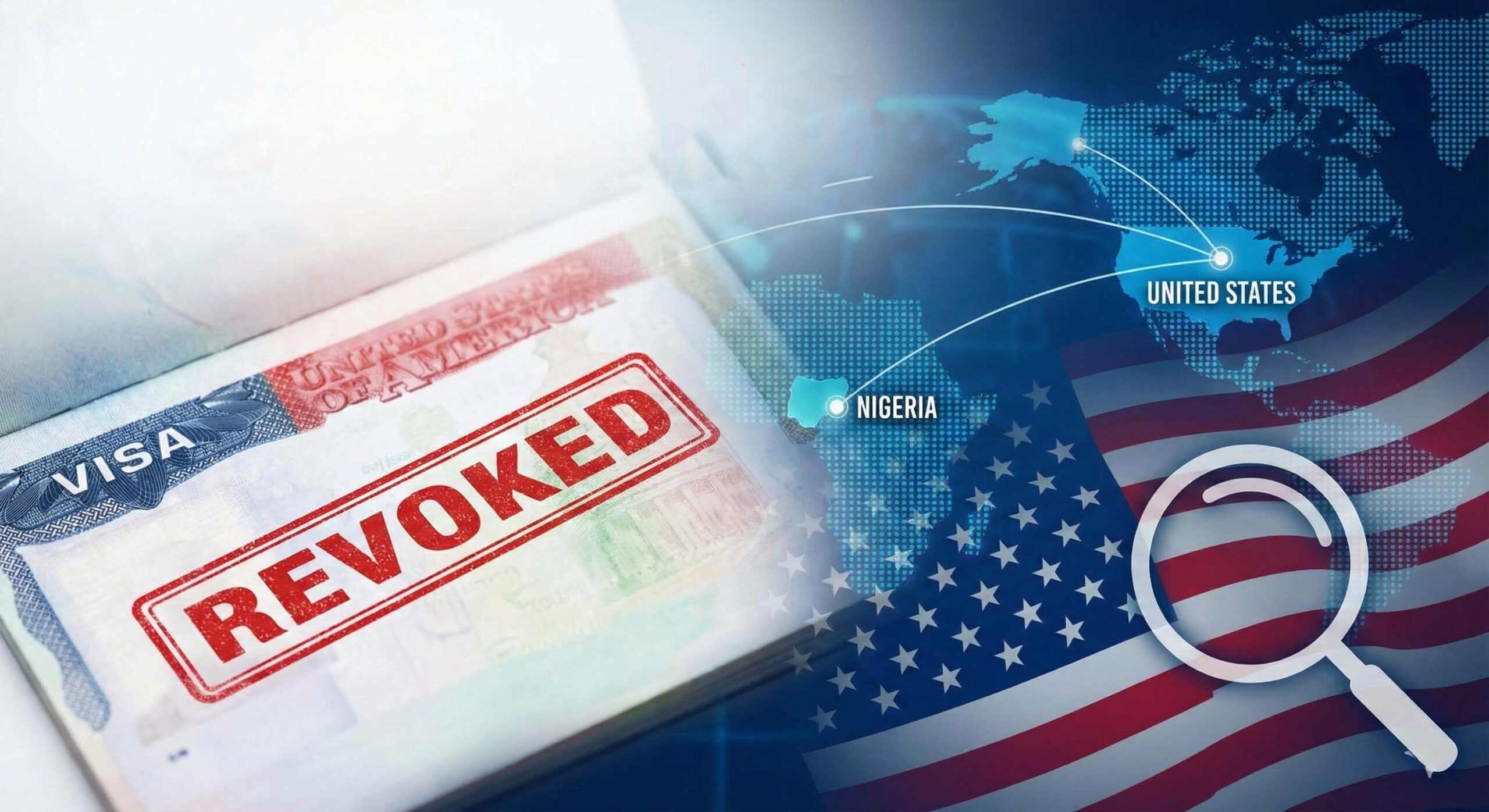
The news coming out of the United States is enough to send a shiver down the spine of anyone currently living there on a visa or planning to relocate. In a historic crackdown, the Trump administration has reportedly revoked more than 100,000 foreign visas in just its first year back.
If you are a Nigerian currently in the US (“Naija in Diaspora”) or someone finalizing your plans to move, you need to pay close attention to this. This isn’t just about politics; it’s about your legal status and your future.
The Numbers Don’t Lie
According to a recent report by Fox News, the US State Department revoked over 100,000 visas in 2025. To put that in perspective, that is more than double the number revoked the previous year.
This massive surge follows a strict “day one” executive order on foreign vetting. The administration is reviewing all 55 million foreigners who currently hold valid US visas. Yes, even if you already have your visa stamped, you are being watched.
Who is Being Targeted?
The breakdown of these revocations is very specific, and it highlights the areas where Nigerians often find themselves. Here is what you need to know:
1. The “Overstayers” (Business & Tourists) The majority of the revocations were for business and tourist travelers who overstayed their visas.
- For my Naija people: We know the temptation to extend a short holiday or business trip can be strong, especially when trying to hustle or secure a more permanent footing. But this data shows that the US immigration systems are tracking exit dates more aggressively than ever. An overstay is now a direct ticket to revocation.
2. International Students (Approx. 8,000 Visas Revoked) Thousands of students lost their legal status. The primary reason? Criminal encounters with law enforcement.
- The Warning: This includes drug possession and distribution. For Nigerian students, this is a stark reminder: Avoid trouble at all costs. What might seem like a minor infraction or a “student mistake” is now being used as grounds to cancel your visa and send you home.
3. Specialized Workers (Approx. 2,500 Visas Revoked) These are the H1B holders and skilled professionals. The reasons for revocation here are shocking:
- 50% were for Drunk Driving (DUI) arrests.
- 30% were for assault or battery charges.
- 20% were for theft, fraud, or child abuse.
- The Analysis: If you are working in the US, your professional excellence is not enough to save you if your personal conduct is messy. A single DUI could end your American career instantly.
The “Public Charge” Rule: A Hurdle for New Movers
For those of you in Lagos, Abuja, or PH planning to move, the game has changed too. The administration has revived the “Public Charge” rule.
This means visa applicants are being scrutinized on:
- Health: Older or overweight applicants are facing greater scrutiny regarding potential long-term care needs.
- Finances: You must prove you will never rely on US public benefits.
- English Competency: Thankfully, this is usually not an issue for Nigerians, but it is now a strict metric.
What This Means for Nigerians
This aggressive enforcement posture—described as a “continuous vetting center”—means the “check” on your background never stops. They are not just checking you at the embassy in Victoria Island; they are checking you while you are in the US.
This new reality requires a change in mindset:
- Compliance is King: Do not overstay by even a single day.
- Clean Record: Avoid any interaction with law enforcement. No DUIs, no “shady” business, no fights.
- Digital Footprint: Be aware that your social media and public profiles can be part of the vetting process.
Let’s Talk About It!
This news is heavy, but we need to discuss it. I want to hear from you in the comments:
- For those in the US: Does this news make you anxious about your current status? Have you noticed stricter checks at airports or government offices?
- For the “Japa” Crew: Does this discourage you from moving to the US, or are you still determined to go regardless of the stricter rules?
- Analysis: Do you think this crackdown is unfair targeting, or is every country right to protect its borders this aggressively?
Drop your thoughts below! Let’s advise each other so we don’t fall victim to these new rules.